
What homeowners need to know about risk, prevention, and insurance coverage.
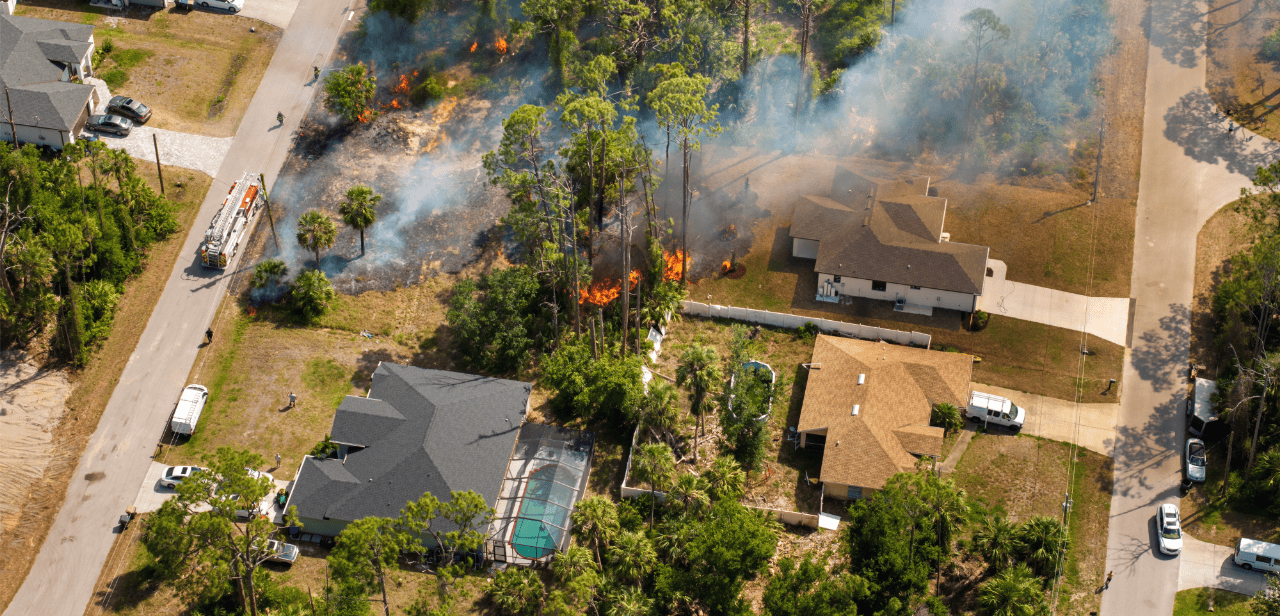
Wildfires aren’t just a Western U.S. problem anymore. Across the Southeast, longer dry seasons, rising temperatures, and expanding development near wooded areas are increasing wildfire risk year after year.
In fact, wildfire season is lasting longer and becoming more unpredictable nationwide, driven by weather conditions like heat, drought, and wind.
Read more to learn how homeowners across Florida, Georgia, the Carolinas, and beyond can be prepared and protected.
Why Wildfires Are a Growing Risk in the Southeast
While the Southeast may not face the same scale of fires as California, our region still sees thousands of wildfires annually, especially during dry spring and fall months.
Key regional risk factors include:
- Dense forests and vegetation near residential areas
- Seasonal drought conditions
- Lightning strikes and human-caused ignitions
- Expanding neighborhoods into “wildland-urban interface” zones
Most homeowners don’t realize homes don’t usually ignite from a wall of flames, they ignite from wind-blown embers landing on or near the home. Here are some steps you can take to prevent wildfires impacting your home.
1. Create a Defensible Space
The most effective way to protect your home is by creating a defensible space—a buffer zone that slows or stops fire spread.
Experts recommend focusing on three key zones:
Immediate Zone (0–5 feet from your home)
- Use non-combustible materials like gravel or stone
- Remove mulch, leaves, and debris
- Keep this area completely clear of flammable materials
Intermediate Zone (5–30 feet)
- Space out trees and shrubs
- Trim branches away from roofs and chimneys
- Keep grass short and well-maintained
Extended Zone (30–100+ feet)
- Remove dead vegetation
- Thin dense tree coverage
- Reduce fuel sources that can carry fire toward your home, (e.g., pine needles, dried grass, shrubs, or hedges)
Creating this space can significantly improve your home’s survivability in a wildfire.
2. Harden Your Home Against Embers
Because embers are the biggest threat, your home’s materials and maintenance matter more than you might think. If you are renovating, consider opportunities to harden your home against embers.
Top home hardening upgrades:
- If you are replacing your roof, consider installing Class A fire-rated roofing materials
- If you are building an addition to your home, use non-combustible siding like brick, stucco, or fiber cement
- If you are replacing windows, upgrade to double-pane or tempered glass windows
- Cover outdoor vents with metal mesh screens
Maintenance Matters More Than You Think
Wildfire protection is an ongoing project. Simple routine steps can make a big difference:
- Clear leaves, pine needles, and branches from roofs and gutters
- Keep trees trimmed at least 10 feet from structures
- Store firewood and flammable materials away from your home
- Regularly inspect vents, decks, and crawl spaces
Even small vulnerabilities—like debris in gutters—can ignite quickly when embers land. These small actions reduce the “fuel” that allows fires to spread.
3. Don’t Overlook Your Home Insurance Coverage
Your homeowners insurance coverage is an important part of preparing financially for wildfire risk.
Here’s what to review in your policy:
- ✅ Coverage for wildfire/fire damage
- ✅ Dwelling limits reflect current rebuild costs
- ✅ Personal property coverage is up to date
- ✅ Loss of use (temporary housing) coverage
- ✅ Deductibles and exclusions
After a wildfire, documenting damage and contacting your insurer to file a claim quickly is critical.
Build a Wildfire Emergency Plan
Even in the Southeast, wildfires can spread quickly.
Make sure everyone in your household:
- Knows evacuation routes
- Has a “go bag” ready
- Keeps an updated home inventory
- Has a communication plan
Preparation can make all the difference when minutes matter.
Wildfire Protection Is a Community Effort
One home taking action helps, but neighborhoods working together make the biggest impact.
- Encourage neighbors to maintain defensible space
- Work with local fire departments
- Stay informed about local burn bans and alerts
Wildfire risk reduction works best when communities act collectively.
Final Thoughts: Protecting What Matters Most
Wildfires may be increasing across the Southeast—but the good news is that most home losses are preventable with the right steps.
From maintaining your property to reviewing your insurance coverage, proactive planning can:
- Reduce your risk
- Improve your home’s survivability
- Help you recover faster if disaster strikes