
El Niño in Florida: What Homeowners Should Know About Flood Risk El Niño is back in the weather conversation, and for Florida homeowners, the insurance conversation shouldn’t be far behind. While much of the attention around El Niño focuses on changing weather patterns, homeowners should also understand what those conditions could mean for flooding, insurance coverage and home preparedness. You …
El Niño in Florida: Flood Risks & Insurance | Tower Hill
El Niño in Florida: What Homeowners Should Know About Flood Risk
El Niño is back in the weather conversation, and for Florida homeowners, the insurance conversation shouldn’t be far behind.
While much of the attention around El Niño focuses on changing weather patterns, homeowners should also understand what those conditions could mean for flooding, insurance coverage and home preparedness.
You can’t control the weather, but you can take a few simple steps now to understand your risk, review your insurance coverage and make sure your home is ready.
What is El Niño?
El Niño is part of the El Niño-Southern Oscillation, or ENSO, a naturally occurring climate pattern in the tropical Pacific Ocean. During El Niño, trade winds weaken and warmer-than-usual surface water develops in parts of the Pacific. Those changes can affect weather patterns around the world.
From an insurance perspective, the important part is preparation. El Niño can bring changing weather conditions, making it a good time to review your insurance coverage and take practical steps to help protect your home from weather-related damage.
Why Floridians Should Care
Florida typically moves into its drier season in the fall, but a strong El Niño can make those months considerably wetter and stormier than usual. NOAA expects the current El Niño to continue strengthening, with a greater than 83% chance of a very strong event during fall and winter 2026–27.
Historically, El Niño brings above-average precipitation to Florida from fall through spring. Across parts of the southern U.S., rainfall during El Niño winters has averaged as much as five inches above normal from November through March. Strong El Niño events have also been associated with increased storminess and periods of well-above-average rainfall across Florida.
For homeowners, that makes flooding an especially important risk to understand and prepare for.
Does homeowners insurance cover flooding?
Most homeowners insurance policies do not cover damage caused by flooding. Flood insurance is separate coverage designed to help protect your home and belongings from covered flood losses.
Tower Hill offers flood insurance for homeowners who want to add that protection.
That distinction is important because flooding can happen even when your home isn’t in a designated high-risk flood area.
29% of National Flood Insurance Program claims from 2014 through 2024 came from areas outside current high-risk flood areas.*
“One of the biggest misconceptions we hear from homeowners is that living outside a high-risk flood zone means they don’t need to think about flooding,” said Patricia Walker, Vice President of Claims at Tower Hill Insurance. “Florida homeowners should understand both their individual flood risk and what their homeowners policy does—and does not—cover before severe weather arrives.”
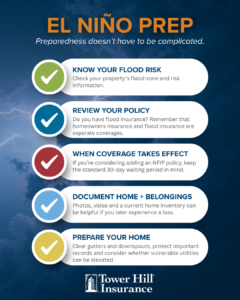
Know your flood risk
You don’t have to live along the coast—or even near a large body of water—to experience flooding.
Poor drainage systems, storms, neighborhood construction and broken water mains are among the conditions that can cause flooding.
A good first step is to check the flood risk where you live. FloodSmart.gov provides flood-zone and risk information that can help you better understand the potential for flooding at your property.
And if you’re unsure whether you already have flood insurance, check your policy documents or talk with your insurance agent.
Don’t already have flood coverage? A Tower Hill insurance agent can help you understand your options and get a flood insurance quote. Find an agent near you.
Don’t wait for rain to start thinking about flood insurance
If you’re considering flood coverage, timing matters.
For policies purchased through the National Flood Insurance Program, coverage generally takes effect 30 days after purchase, although there are some exceptions.**
That means waiting until severe weather is in the forecast may be too late.
Reviewing your coverage ahead of time gives you a chance to understand what protection you have—and what you may still need.
A few ways to prepare your home now
Preparing for changing weather doesn’t have to be complicated. Start with a few practical steps.
Clear your gutters and downspouts
Remove leaves and other debris at least twice per year so water can drain properly instead of overflowing around your home. FloodSmart specifically recommends keeping gutters and downspouts clear as a way to help reduce flood damage.
Protect important documents
Keep insurance papers, birth certificates, passports and other important records somewhere dry and secure. FloodSmart recommends using a watertight location and keeping digital copies when possible.
Take a home inventory
Use your phone to take photos or video of major household items and valuables, and record important details when possible. Keep a copy of your inventory somewhere you can access even if your home is damaged.
The Insurance Information Institute recommends maintaining an up-to-date home inventory because it can make filing a claim easier and help document losses after a disaster. See Triple-I’s home inventory tips.
Not sure where to start? We’ve created a quick article to help you get started.
Look for ways to reduce your flood risk
Small maintenance steps can also help your home handle heavy rain. Look for exterior gaps or cracks where water could enter, and address drainage issues that allow water to collect near the home.
The Insurance Institute for Business & Home Safety recommends clearing gutters and downspouts and sealing exterior gaps and cracks as practical ways homeowners can help reduce water intrusion during severe weather. See IBHS’s Thunderstorm Ready guidance.
Depending on your home and flood risk, additional mitigation may include elevating vulnerable utilities such as your water heater or air-conditioning equipment.
Electric vehicles also pose a particular fire risk after flooding if their high-voltage batteries are damaged or submerged. Follow these safety guidelines.
Review your insurance
Take a few minutes to understand what your homeowners policy covers and whether you have separate flood insurance.
If something isn’t clear, ask your insurance agent. It’s much easier to have that conversation before severe weather arrives.
If your home is damaged, document it
If you experience damage to your home or property, take photos or video of the damage before cleanup when it is safe to do so.
Take reasonable steps to prevent additional damage, such as making necessary temporary repairs, and keep receipts for materials, repairs and other related expenses. The Insurance Information Institute also recommends documenting damaged property and keeping an inventory or list of affected belongings to help with the claims process. Read Triple-I’s homeowners claim guidance.
“One of the most helpful things homeowners can do before a loss is document their home and belongings. Keeping an up-to-date home inventory, taking photos and knowing where important policy information is stored can make it much easier to provide the documentation needed if you ever have to file a claim,” Walker said.
Tower Hill policyholders can report residential property and flood claims through the Tower Hill Mobile App, online at THIG.com/report or by calling 800-342-3407. Photos, estimates, receipts and other claim documentation can also be submitted as part of the claims process.
Preparation can make a difference
El Niño is a reminder that Florida weather doesn’t always follow the same script.
You may not be able to control when or how much it rains, but you can know your flood risk, understand your insurance coverage and take steps to protect the home you’ve worked hard to build.
The best time to understand your risk and your insurance coverage is before you need either one.
El Niño and Flood Insurance FAQs
Does homeowners insurance cover flooding caused by heavy rain?
Standard homeowners insurance policies do not cover flood damage. Separate flood insurance is designed to cover certain losses caused by flooding.
That distinction matters because water damage can be covered differently depending on how it occurs. For example, damage caused by flooding is generally excluded from a standard homeowners policy, while some sudden or accidental water damage may be covered depending on the policy.
Do I need flood insurance if I’m not in a high-risk flood zone?
Flooding can occur outside high-risk areas. From 2014 through 2024, 29% of NFIP flood insurance claims came from areas outside current high-risk flood areas.
How long does it take for flood insurance coverage to begin?
NFIP flood insurance generally has a 30-day waiting period after purchase before coverage takes effect and certain exceptions apply.
What should I document before severe weather?
Take photos or videos of major household items and valuables, and keep copies of important documents in a safe, dry place.
What can I do around my home to prepare for heavy rain?
Keeping gutters and downspouts clear is one simple step. FloodSmart also recommends protecting important documents, documenting belongings and considering ways to elevate vulnerable utilities.
How do I report a claim to Tower Hill?
Tower Hill residential property and flood claims can be reported through the Tower Hill Mobile App, at THIG.com/report or by calling 800-342-3407.
About the Expert
Patricia Walker, Vice President of Claims, Tower Hill Insurance
Patricia Walker is Vice President of Claims at Tower Hill Insurance, where she helps lead year-round catastrophe planning and preparedness efforts to support Tower Hill customers. With more than 30 years of claims experience, including over 20 years in catastrophe management and more than two decades at Tower Hill, Patricia brings extensive expertise in claims response and disaster recovery. She provides valuable insight into homeowner preparedness, property risks and insurance considerations related to severe weather and natural disasters.
__________________________________________________________________________
*https://www.floodsmart.gov/flood-zones-and-maps/what-is-my-flood-risk
** https://www.floodsmart.gov/get-insured/buy-a-policy